The challenge
The project’s goal was a successful release of the mobile application in sync with Wave 2’s hardware development and retail release preparations.
Key challenges of the project:
- Validating React Native as a hybrid technology for a consistent user experience on both iOS and Android devices, especially in relation to Bluetooth Low Energy (BLE) connectivity.
- Synchronizing mobile app design and development with the new wristband’s hardware development lifecycle in order to meet the market release target.
- Conducting extensive QA testing of the mobile application and stress testing with the wristband to ensure a highly stable user experience across both iOS and Android devices.
The process
As the development of Embr Labs’ second-generation product commenced, the client’s team leveraged their extensive experience and key learnings from the first-generation product, which provided valuable insights into the development process. The journey began with a thorough Discovery phase, during which Embr Labs shared their business expectations, objectives, and customer insights with the Salt & Pepper team. This was followed by a focused Design phase, paving the way for the subsequent development phase.
UI/UX design process
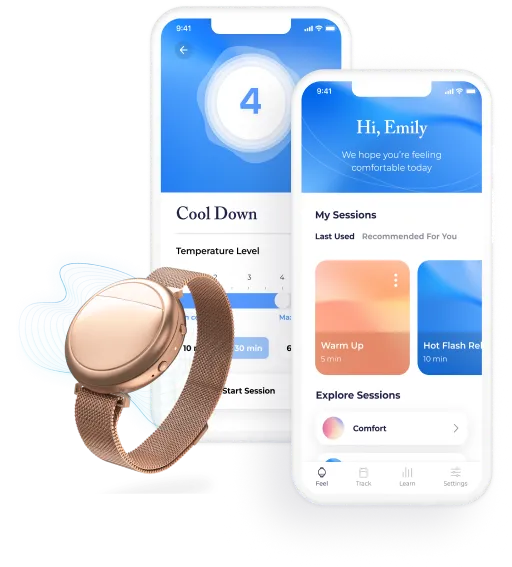
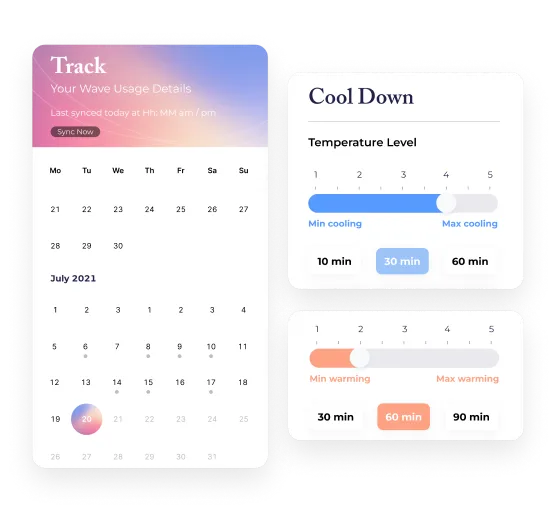
The client’s Product Designer and Product Owner conducted extensive research, leveraging user personas to guide the design process. Collaborating closely with Salt & Pepper’s UI/UX Designer, a robust design system was implemented. Features were developed iteratively, incorporating user testing and feedback throughout the process. Figma prototypes facilitated user testing and streamlined decision-making. The focus was on achieving an aesthetically appealing and consistent app look, while prioritizing user experience. Through close collaboration with the Embr Labs team, optimal UI/UX solutions were identified, addressing key challenges and enhancing the overall product design.
- Research Extensive research was conducted to address UI/UX challenges, incorporating user feedback to define features. A user-centric design approach ensured optimal solutions, guided by valuable insights gathered throughout the process.
- Design System Collaboratively established a robust design system initiated by the client’s Product Designer and extended by Salt & Pepper’s UI/UX Designer. This comprehensive system optimized subsequent changes, providing greater clarity and time-saving benefits for the development team with consistent components throughout the app.
- Prototyping Developed interactive prototypes used for user testing and validating assumptions. These prototypes empowered the client to gather valuable insights and facilitated efficient decision-making by stakeholders on feature optimization.
- Cross-Platform Design Implemented a cross-platform design approach that considered platform-specific UX requirements. The app seamlessly adapts to iOS and Android, delivering an optimized user experience while leveraging platform strengths for enhanced usability and engagement.
Development process
Throughout the development process, a structured approach encompassing discovery and execution phases ensured project success. In the discovery phase, requirements were analyzed, a proof of concept was built, and a robust system architecture was designed. Thorough research informed the selection of an appropriate tech stack.
In the execution phase, features were developed iteratively based on user stories defined by the client’s Product Owner and technical decisions made by Salt & Pepper’s experienced team. Our primary focus was on establishing seamless communication between the wristband device, mobile app, and cloud services, while prioritizing an exceptional user experience.
- Proof of Concept Validation We built a proof of concept to ensure React Native’s suitability for the mobile app, especially for seamless communication with the wristband via Bluetooth Low Energy (BLE).
- System Architecture Design Designed the overall system architecture and carefully selected the technology stack, ensuring a robust and scalable foundation for the project’s success.
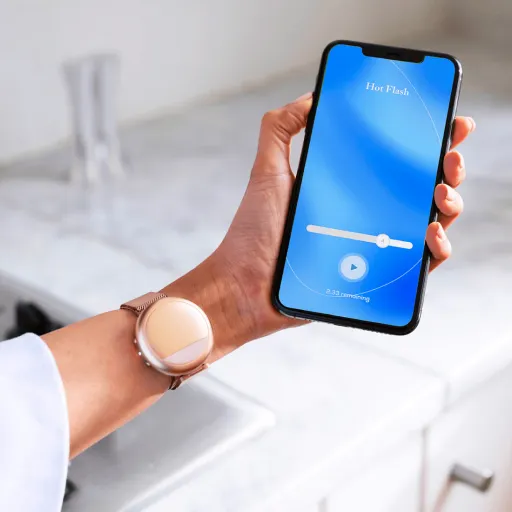
- Mobile App Development Developed the feature-rich mobile application, leveraging React Native, to provide a user-friendly interface and seamless control over the Embr Wave wristband’s temperature and functionality.
- Cloud Infrastructure Setup Built a secure and scalable cloud infrastructure on Google Cloud, incorporating Firebase, Cloud Functions, Kubernetes, BigQuery and NoSQL databases. It enabled data management, firmware releases, and efficient DevOps practices.
- Extensive QA and Stress Testing Conducted rigorous quality assurance testing to ensure the mobile app’s compatibility with the wristband across iOS and Android devices. We also performed stress testing on the wristband device to make sure we have a reliable and stable user experience.
- Agile Way of Working Employing a SCRUM Agile methodology, we collaborated closely with the Embr Labs team, delivering work iteratively in two-week sprints. Regular reviews and demos ensured effective stakeholder management and alignment throughout the project.
The outcome
The project team successfully delivered the Wave 2’s mobile application, aligning it seamlessly with hardware development, firmware updates, and product release to market. The Wave 2 wristband with its redesigned application enhances the user experience, offering valuable daily benefits and personalized insights that contribute to users’ overall well-being.
Embr Labs highly values the app as a “world-class product” and we continue to extend it with new features. It facilitated expansion into the UK market and boasts over 95,000 users with an impressive App Store rating of 4.8 out of 5.
Key factors that contributed to this project’s success:
- Close collaboration between Salt & Pepper and Embr Labs, with a focus on transparent communication ensuring effective coordination across multiple workstreams.
- Maintaining an open-source React Native library for Bluetooth Low Energy (BLE) communication, ensuring ongoing support and future compatibility.
- Employing a structured approach to validate assumptions, make informed decisions, and mitigate risks, particularly regarding the chosen technical solution.