
The challenge
Building an MVP in a short time is a challenge in itself. Building one that integrates with several third-party services in that time adds even more complexity.
Key challenges of the project:
- Integrating several third-party services, like Pinecone for search, Formance for the ledger, Stripe for payments and Yoti for identity verification. To reduce risk, the team chose reliable services that matched the project’s needs, created detailed integration plans, identified dependencies and stayed in touch with vendors for support.
- Aligning the client’s expectations with what third-party services could do, particularly for search with Pinecone. Regular communication between the client and development teams, with iterative feedback loops, resolved it.
The process
The web platform was developed through UI/UX design and development stages. The UI/UX phase began with extensive research, with user feedback shaping a user-centric design. Together, the teams established a robust design system and interactive prototypes for validation.
In development, a careful technology selection preceded the system architecture and cloud infrastructure setup, using lambda microservices and an infrastructure-as-code framework. Development ran iteratively with SCRUM, TailwindUI components sped up the interface work, and QA improved through refined deployment practices.
UI/UX design process
The design phase was followed by development in an agile approach, with seven sprints focused on the MVP.
- Research Extensive research addressed UI/UX challenges, with user feedback defining the features. A user-centric design approach, guided by insights gathered throughout, ensured the right solutions.
- Design System A robust design system, started by the client’s Product Designer and extended by Salt & Pepper’s UI/UX designer, made later changes easier and gave the development team consistent components throughout the app.
- Prototyping Interactive prototypes were used for user testing and validating assumptions, helping the client gather insights and stakeholders decide efficiently on features.
- Cross-Platform Design The design considered platform-specific UX requirements, so the platform adapts to every device while using each platform’s strengths.
Development process
Features were built from a backlog prepared by an internal product owner and the client’s stakeholders, who decided priorities together. The main focus was a robust search engine for services, a core feature of the platform, and the seamless integration of third-party tools.
- Discovery and Technology Choices Before execution, each technical team member researched technologies such as Formance, Yoti and Pinecone for the requirements. The options were documented in DACI tables, giving a clear view for deciding the best one.
- System Architecture and Cloud Setup The platform runs on a lambda microservices architecture, with SST as the infrastructure-as-code framework for its ready Next.js deployment, productivity, clear AWS infrastructure definitions and web dashboards for managing the app and querying the database.
- Development Features were developed iteratively with SCRUM in two-week sprints. At first, the new team moved carefully and delivered pages in parts rather than miss sprint goals; as it became more cohesive, it cleared the outstanding work.
- Design The application was built with components from the TailwindUI library, which sped up development significantly.
- QA and Stress Testing Early on, deployments for testing came at the end of each sprint. Mid-project, the work was split among the front-end developers and pages went to the testing environment as soon as they were ready, following planned estimates.
- Agile Way of Working With a SCRUM methodology, we worked closely with the Counsl team, delivering in two-week sprints. Regular reviews and demos kept stakeholders aligned throughout the project.
The outcome
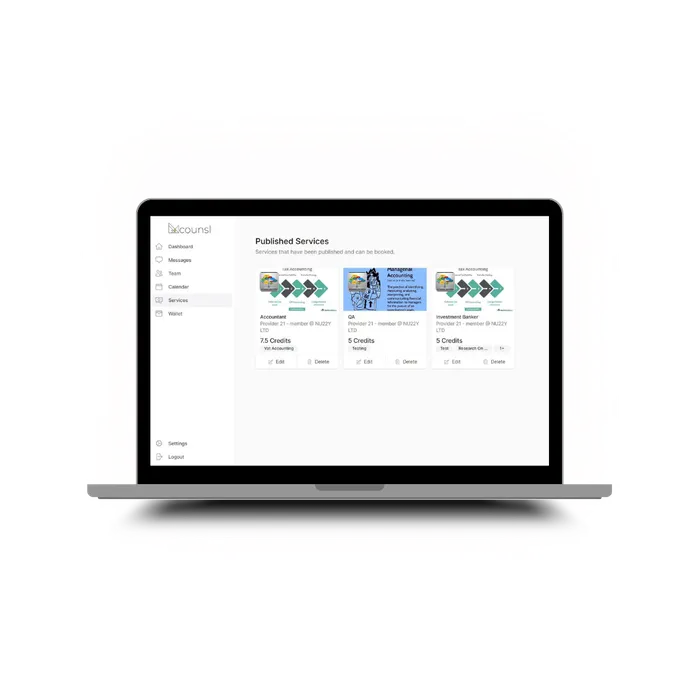
The team delivered a robust platform that is now live, with more than 40 businesses registered in the first two weeks after launch.
Fast-paced and demanding as it was, the project succeeded thanks to a few factors:
- The team stayed aligned with the client’s Product Owner at all times, working in iterations that allowed flexibility and shorter feedback loops.
- We worked closely with third-party providers such as Formance and Yoti, resolving issues faster during development.
- A robust decision process, with DACI boards, helped the team make the best technical decisions for a stable and reliable application.